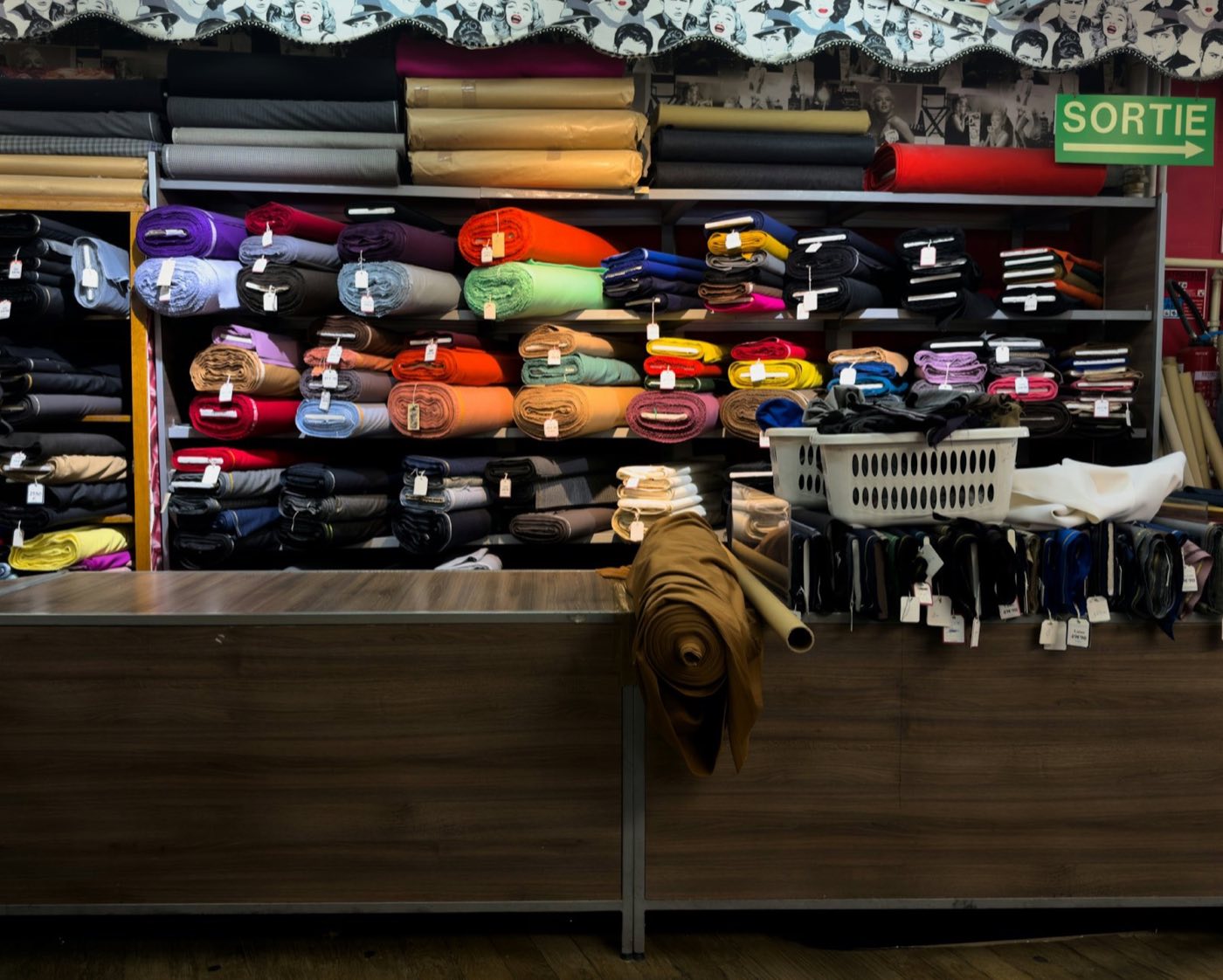
A textile factory can have many production processes—Warping, TFO, Rapier, Water Jet, Dyeing, Finishing and Quality Control.
If management looks at every process as a separate financial calculation, the overall picture can become difficult to understand.
A better approach is:
Capture detailed data at each process, but merge the information into one simple daily costing model.
The complete journey becomes:
Yarn → Production → Weaving → Dyeing & Finishing → Finished Fabric → Sales
This gives management a clear answer to one important question:
What did it cost to convert today’s yarn into today’s finished fabric?
- Start With Yarn
Assume the factory consumes:
10,000 Kg Yarn
Average yarn cost:
₹200/Kg
Therefore:
10,000 × ₹200 = ₹20,00,000
Raw Material Cost = ₹20,00,000
This is the starting point of the production cost.
- Merge All Manufacturing Expenses
The factory may have several machines and departments, but for management reporting these can be combined into major cost categories.
Cost Category
|
Daily Cost
|
Yarn / Raw Material
|
₹20,00,000
|
Production & Processing
|
₹5,50,000
|
Electricity, Steam, Water & Fuel
|
₹1,00,000
|
Labour
|
₹75,000
|
Maintenance & Spares
|
₹35,000
|
Factory Overheads
|
₹40,000
|
Total Manufacturing Cost
|
₹28,00,000
|
Here, Production & Processing includes the combined cost of activities such as Warping, TFO, Weaving, Dyeing and Finishing.
The detailed ERP records can remain available for analysis, but the management dashboard shows one easy-to-understand number.
Total Daily Manufacturing Cost = ₹28,00,000
- Calculate Production Loss
Suppose the factory starts with:
10,000 Kg
After all production and processing, the saleable finished fabric is:
9,200 Kg
Difference:
800 Kg
This can include process loss, wastage, rejection and other production variations.
Therefore, the factory should calculate its actual cost based on the saleable output.
Cost Per Kg
₹28,00,000 ÷ 9,200 Kg
= ₹304.35/Kg
This means the approximate manufacturing cost of the finished fabric is:
₹304.35 per Kg
- Calculate Cost Per Metre
Suppose the 9,200 Kg finished fabric equals:
23,000 metres
Then:
₹28,00,000 ÷ 23,000 metres
= ₹121.74 per metre
Now management knows:
Cost/Kg = ₹304.35
Cost/Metre = ₹121.74
These numbers are useful for pricing, order costing and margin analysis.
- Calculate Sales Value
Suppose the average selling price is:
₹150 per metre
Production:
23,000 metres
Therefore:
23,000 × ₹150
= ₹34,50,000
Daily Sales Value = ₹34,50,000
- Calculate Manufacturing Contribution
Sales value:
₹34,50,000
Less manufacturing cost:
₹28,00,000
Manufacturing Contribution = ₹6,50,000
This should not automatically be considered net profit.
A complete profit calculation may also include:
- Sales commission
- Freight
- Administration expenses
- Finance costs
- Depreciation
- Discounts
- Returns
- Taxes
- Other corporate expenses
Therefore, it is better to call this manufacturing contribution until all relevant business expenses are included.
- Simple Daily Factory Dashboard
A management dashboard can summarize the complete factory in one view.
Production
Yarn Consumed: 10,000 Kg
Finished Fabric: 9,200 Kg
Finished Fabric: 23,000 Metres
Process Loss: 800 Kg
Cost
Raw Material: ₹20.00 Lakh
Production & Processing: ₹5.50 Lakh
Energy & Utilities: ₹1.00 Lakh
Labour: ₹0.75 Lakh
Maintenance: ₹0.35 Lakh
Overheads: ₹0.40 Lakh
Financial Result
Total Manufacturing Cost: ₹28.00 Lakh
Cost/Kg: ₹304.35
Cost/Metre: ₹121.74
Sales Value: ₹34.50 Lakh
Manufacturing Contribution: ₹6.50 Lakh
This is much easier for management to understand than reviewing hundreds of individual transactions.
- Detailed Data Should Still Be Available
Merging the information does not mean removing process-level tracking.
The ERP should still record:
Warping
- Production
- Yarn consumption
- Wastage
- Machine hours
TFO
- Production
- Yarn consumption
- Power
- Wastage
Rapier / Water Jet
- Production
- Efficiency
- Power
- Machine hours
- Wastage
Dyeing & Finishing
- Batch production
- Chemicals
- Water
- Steam
- Fuel
- Reprocessing
- Rejection
But management doesn’t need to see all this information on the first screen.
The dashboard should provide the merged result, with the ability to drill down whenever required.
- Why This Approach Works
A factory has two different information requirements.
Production Team
Needs detailed information:
Machine → Process → Batch → Material → Production → Wastage
Management
Needs summarized information:
Input → Output → Total Cost → Cost/Kg → Cost/Metre → Sales → Contribution
A good textile ERP should provide both.
- The Complete Business Calculation
The complete calculation can be simplified to:
Input
Yarn Cost
↓
Manufacturing
Production + Energy + Labour + Chemicals + Maintenance + Overheads
↓
Output
Finished Fabric
↓
Cost
Total Manufacturing Cost ÷ Saleable Quantity
↓
Sales
Finished Quantity × Selling Price
↓
Contribution
Sales Value − Manufacturing Cost
This provides a simple financial picture of the entire factory.
Conclusion
A textile factory may have multiple machines, departments and production processes, but management should not have to understand hundreds of separate numbers just to know whether the factory is performing well.
The right approach is:
Capture detailed data at every process.
Merge the data for management reporting.
Keep detailed drill-down available when required.
For a factory operating Warping, TFO, Rapier, Water Jet and Dyeing, the management view can simply be:
Yarn → Production → Processing → Finished Fabric → Cost → Sales → Contribution
The objective is simple:
**Know what came in.
Know what was produced.
Know what it cost.
Know what it sold for.
Know what contribution was generated.**
One factory. One connected data flow. One clear daily view.
By Decent Technologies